
Articles
When should I start training my puppy?

Before determining the right age to begin training a puppy, it’s important to understand the basic “Stages of Development” in a dog’s early life. The four stages below are widely accepted by trainers, researchers, and behaviorists.
Unfortunately, today many owners choose the wrong path when faced with behavioral challenges. Instead of addressing the problem, they give up—surrendering the dog to a shelter or even opting for euthanasia. This is unfair, especially because humans are often the ones who unintentionally created those behavioral issues in the first place.
You can’t sweep the dog under the carpet.
If you ever find yourself in that position, don’t take the easy way out.
There are alternatives.
At K9-Training Specialist, we recommend the following:
Prenatal / Neonatal (0–2 weeks)
During this period, the mother introduces the pup to the world. Puppies are blind and deaf but can smell, touch, and taste. Imprinting begins here, and gentle early handling provides mild stress that stimulates the adrenal/pituitary system. This early stimulation helps puppies become more disease-resistant, better problem-solvers, and more confident—traits that later translate into improved stress tolerance.
Transitional (2–4 weeks)
Socialization (4–12 weeks)
In this stage, the puppy’s eyes and ears open as he begins exploring his surroundings. Tail wagging, growling, barking, and eating semi-solid foods begin. Early socialization among littermates develops naturally during this period.
Juvenile (12 weeks to sexual maturity ~9 months)
Once you understand the stages of development, answering the question “When should I start training my puppy?” becomes much easier.
Training can begin as early as the Prenatal/Neonatal period.
After 30 years of training, I’m often asked:
“When do you start training?”
and
“How often do you train?”
My answer is always the same:
I start as early as possible… and I only train once.
“Once?” people ask.
Yes—
I start when the puppy is born,
and I finish when the dog passes away.
Training is not a chore. Training is a lifestyle. It’s something to enjoy and embrace. Done correctly, it can save your dog’s life and give you a well-mannered, respectful companion for many years.
If you are planning to get a puppy, here are three things we highly recommend:
1. Research your breed.
2. Contact a certified trainer or behaviorist before getting the puppy.
Spend time learning about the breed that best matches your family’s lifestyle. The American Kennel Club is an excellent resource.
If you plan to adopt from a shelter, seek guidance from staff and an experienced trainer who can help evaluate temperament and suitability.
3. Create a training plan immediately.
For any questions, don’t hesitate to contact Jorge A. Fleming with K9-Training Specialist, LLC in Maryland at 301-980-2204 or through our contact form.
Electronic Dog Collars
“The Shocking Truth”
No topic in the dog training world sparks more heated and divisive debate than the “Electronic Dog Collar,” or the e-collar. Is it useful or damaging?…

Before determining what is the right age to start training a puppy, it is important to discuss the “Stages of Development” in a puppy’s life…
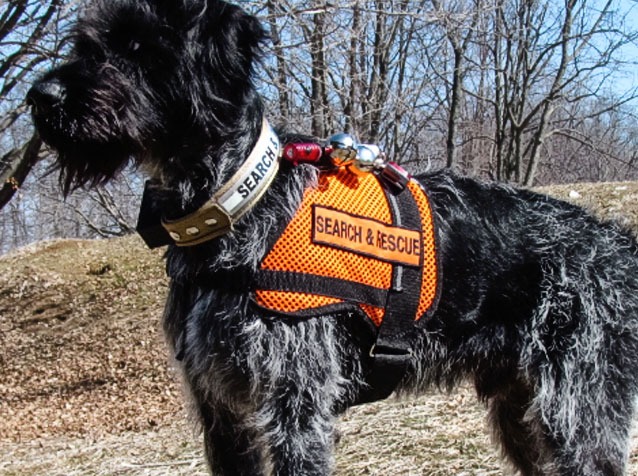
Hi my name is Andreas Vom Merkle but most people just call me Goose. I am a 2 1/2 year old Deutsch Drahthaar…