
Articles
You can’t sweep your dog under the carpet
How to save your dog’s life

Most of us, at some point, face situations we’d prefer not to deal with. And like many people, we’re tempted to “sweep things under the carpet” and hope the problem disappears. We see it everywhere—Congress postponing difficult decisions, corporations dismissing issues instead of resolving them, individuals ignoring addictions, and marriages ending because no one wants to do the work. The easy way out is tempting… but rarely the right path.
Unfortunately, this same mindset has crept into the dog training world. When a dog develops a behavioral problem that seems hard to fix, many owners give up. Some surrender the dog to a shelter; others, tragically, choose euthanasia. In many of these cases, the underlying issue was created—directly or indirectly—by us humans.
You can’t sweep your dog under the carpet.
And if you’re in this situation, I want to tell you something clearly: There are alternatives.
At K9-Training Specialist, we recommend three essential steps:
1. Don’t try to solve a complex problem alone.
Behavioral issues often have deeper causes that require professional evaluation. Most reputable dog training associations can help you find a qualified specialist in your area.
Reach out. You’re not alone in this.
2. Don’t let cost stop you from doing the right thing.
Your dog depends on you. Professional trainers and behavior specialists will often work with you to create an affordable plan.
At K9-Training Specialist, we never turn away a client because of money.
3. Commit to the process.
Most behavioral issues can be fixed—but only with consistency and willingness to follow the guidance of the trainer. Your dedication matters as much as the professional’s expertise.
Talk to anyone who has adopted a dog from a shelter and you’ll often hear the same truth: Sometimes the “broken” dogs become the very best companions.
By choosing not to give up, you may not only save your dog’s life—you may experience one of the most rewarding decisions you’ll ever make.
A Word About E-Collars: Understanding the Debate
In today’s dog training world, there is a highly vocal group that promotes a “politically correct” stance: total opposition to e-collars or anything perceived as “punishment,” as defined by the Skinnerian Operant Conditioning model. But here’s the truth: The e-collar is simply another training tool—no different in principle from a leash, martingale, or headcollar.
In fact, the level of correction from an e-collar is often no harsher than a mother dog giving a quick nip to an unruly puppy.
Many “100% positive” trainers insist they never use punishment. Yet, by definition, withholding a treat when a dog fails to perform a behavior is punishment. Denying something desired is a form of negative punishment under the very model they reference. So the claim of being “purely positive” isn’t fully honest—or fully informed.
The truth is that many trainers reject e-collars simply because they don’t understand how to use them correctly or have never taken the time to learn. Ironically, many of these same trainers support electric fences, which operate under the same principle.
On the other side, we have trainers who understand the value of the e-collar but occasionally misuse it or rely on it too heavily. Like any tool, it requires proper training to avoid misuse.
Professional trainers—including legends like Ronnie Smith, George Wilcox, and Jim & Phyllis Dobbs—have used e-collars successfully for decades. They would all agree:
If you don’t know how to use an e-collar, don’t use one until you receive proper instruction.
When applied correctly, e-collars offer benefits no other tool can match, such as:
- Reliable long-distance control
- Improved timing during training
- Highly effective behavior modification
- The ability to correct behaviors (like digging) without the dog associating the correction with the handler
Conclusion
Every trainer—regardless of methodology—should agree on one principle: Lack of understanding, knowledge, or exposure to a tool should never lead to dismissing its effectiveness. The e-collar is no exception.
Used properly, it can save a dog’s life, just as seeking help early and committing to the training process can prevent behavioral issues from escalating.
If your dog is struggling, don’t sweep the problem under the carpet.
Take action. Seek help. Commit to the process. Your dog is counting on you.
For any questions or to get professional help, contact Jorge A. Fleming at K9-Training Specialist, LLC in Maryland: 📞 301-980-2204 or reach us through our contact form.

“The Shocking Truth”
No topic in the dog training world sparks more heated and divisive debate than the “Electronic Dog Collar,” or the e-collar. Is it useful or damaging?…
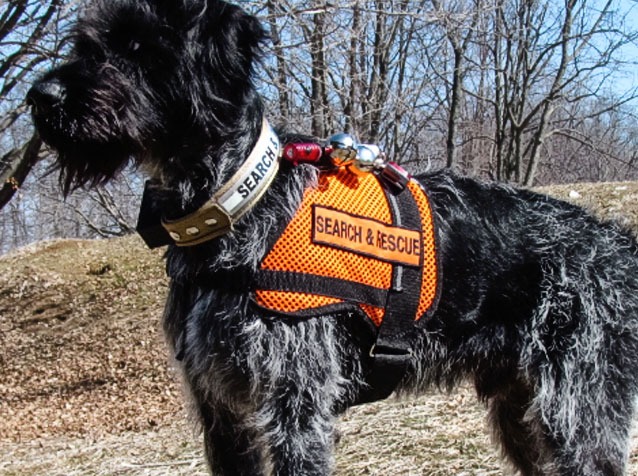
Hi my name is Andreas Vom Merkle but most people just call me Goose. I am a 2 1/2 year old Deutsch Drahthaar…

Before determining what is the right age to start training a puppy, it is important to discuss the “Stages of Development” in a puppy’s life…